June 7, 2026
Thoughts on "100 Days of Sunlight" (and a little "Twinkling Watermelon")
WHO ARE YOU?
I am not talking about your achievements. I am not talking about your degree, your CV, your portfolio, any of that. I mean the real thing. When you say "this is me," what exactly are you pointing at?
It is a strange question, and that is exactly why I like it. It does not let you skim. It makes you sit down and actually think. And lately, a few things have dragged me right back into it.
________________________________________________________________
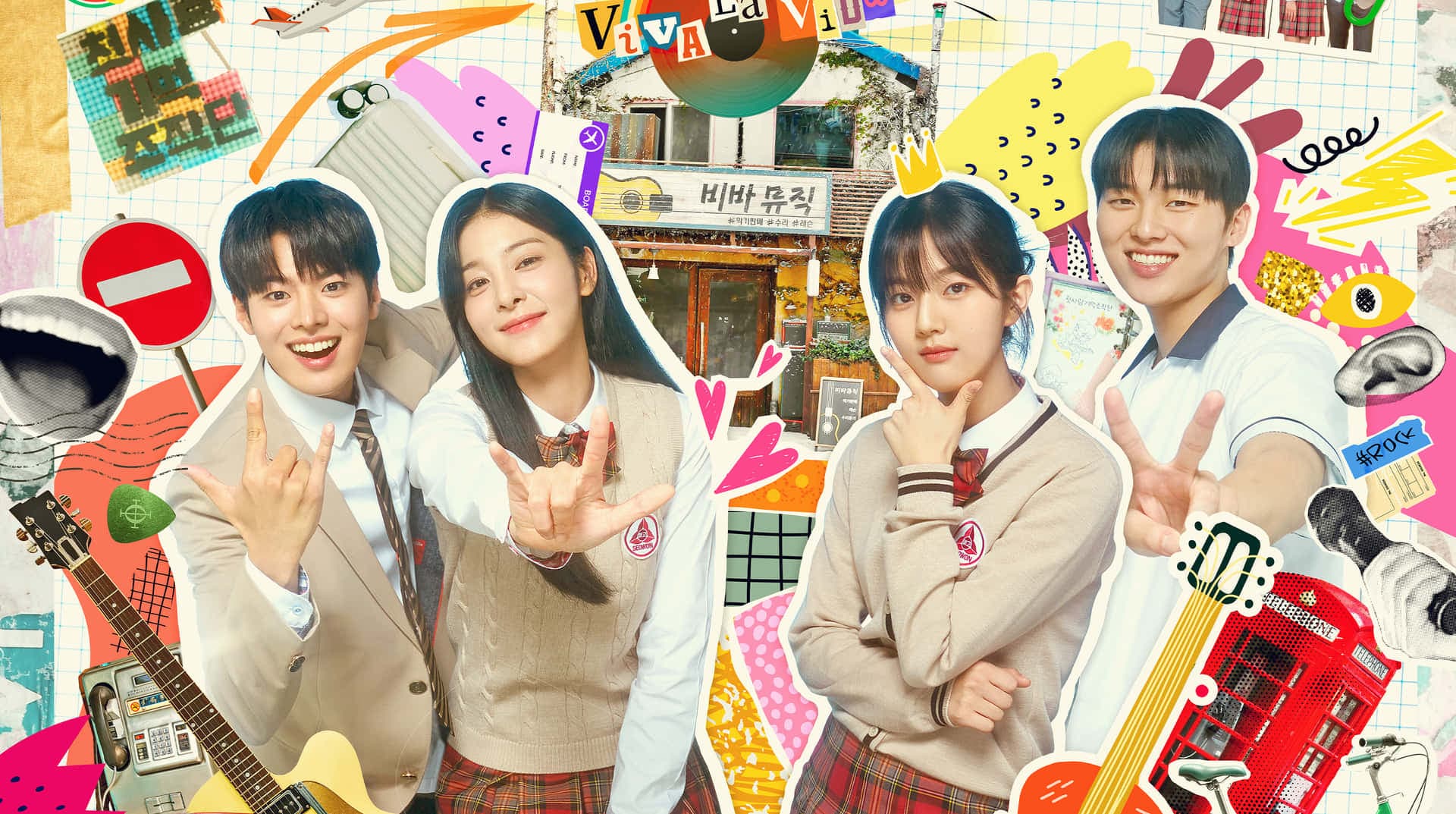
One of them was "Twinkling Watermelon." The concept pulled me in immediately, because the character is trying to alter the past, and there is something funny about how that web works. One small event changes how a single person experiences what happened to them. But that person is never just an individual. Every person is a node in a web. So one small change in one life ripples outward and becomes greater changes down the line. That is why the whole idea of changing one thing and neatly calculating the outcome is, to me, practically impossible. Life is not that straightforward. It is not that clean. But I always love watching movies try to capture it anyway.
That was a while ago, though. More recently, I went through a book called "100 Days of Sunlight" by Abbie Emmons. And the moment I opened it, that same question came knocking again.
So here is what I want to do. I wrote down seven questions about this book a couple of weeks ago, and I am going to walk you through all of them. I will ask you each one, give you a second to sit with it, and then show you where my own head went. Fair warning: my thought process is a little wild. Stay with me.
________________________________________________________________
In the book, Tessa's whole identity is built on her writing and her visual world. So here is the first question.
If you suddenly lost the one thing that defines you the most, your job, your relationship, your skill, who would you even be?
Me personally, I think I would still be me.
I know that sounds too easy, so let me explain with something that has been living in my head. Say you tell me you love the waves. Beautiful. But a wave is just water at one particular moment in time. That same water, a moment later, is calm and still. The molecules do not change. The substance does not change. So which one is the real water, the wave or the calm? You cannot really pick. It is both, depending on the moment.
I think the "you" that you are works exactly like that. It is not one fixed, frozen thing. It is a flow. It is you in this moment, and you in another moment, and both of them are completely you. Losing the wave does not mean you stopped being water.
I will not give spoilers, but something close to this happened to the main character in my own book, "Trying Not to Disappear." He ends up walking straight into this same existential question, and he arrives at his own answer. Not on his own though. Help came from the source that led him to the very dilemma, which is the part I find most interesting. I will leave that one for you to sit with.
________________________________________________________________
Now, Weston hides his wheelchair from Tessa at first. So.
Do we all present a curated version of ourselves to new people? And if we do, is that dishonest, or is it just human?
Me personally, I think we package ourselves at every point in time. Even babies do it. A baby cries, we rush to soothe it, and somewhere in that little brain it learns: crying gets me what I want. So it starts crying with intention. That is the earliest version of packaging I can imagine.
I think everyone carries a curated version of themselves, and I do not think it is a bad thing. It does not mean you are fake. It means you are willing to learn. You are willing to compromise. Not just to fit someone else's perspective, but to reach a standard, and I am choosing that word carefully, that does not stumble the people around you. I say "standard" and not "perfect," because you can never please everyone. I just mean something that sits above the general baseline. Whether you tune yourself for the masses or for a smaller, specific set of people, that part is up to you.
But ultimately, I think we show a creative version of ourselves because we genuinely want to be better versions of one another. To me, that is not dishonesty. That is just being human.
Weston's case is a little different from what I described, though. His was not about image. He simply did not want to become a pity party. And honestly, that is a perspective I respect. So no, I do not think he was being dishonest.
________________________________________________________________
Which of the five senses do you take the most for granted? And what would your everyday life actually feel like if it were suddenly taken from you?
At first I was sure it was sight, mostly because I was so mad on Tessa's behalf. What do you mean she cannot see at all? Think about it. You would flinch every single time someone touched you, because nothing announces itself anymore. That is terrifying.
But when I actually talked it through with my book club, I started leaning toward hearing. If you cannot hear, you lose music, and music is a guide for the soul. A whole world closes off. Hearing is also tied to your balance, so it is bigger than people think.
Still, when I weigh it all, I keep landing back on sight. Losing your sight is the most jarring change there is. You notice it instantly. There is no easing into it. If it were taken from me, my whole world would tip into darkness.
I try to find the light in it, though. If I lost my hearing, I could learn sign language, and I could still watch how alive and expressive people become when they sign. But if I lost my sight, I would lean on braille, and I genuinely cannot yet wrap my head around how much emotion a person can feel through words read with their fingertips. So for me, sight stays the hardest one to lose. It just does.
Although, to be fair, Tessa is the one who showed me it is not the end of the world.
________________________________________________________________
Tessa resists help fiercely for most of the story. So.
Is independence always a strength, or can it sometimes be a form of pride that quietly hurts you?
This one almost feels like it answers itself, because the truth is both.
Independence as a strength, to me, is being able to push yourself past your limits and do as much as you possibly can on your own. That is beautiful. But it tips into pride the moment it starts costing you. Picture performing poorly in a particular subject repeatedly and refusing help or even guidance, simply because you have decided you should be able to do it yourself. And it gets so much harder when it is not a task at all, when it is your actual life. A piece of advice. A correction. That is where it becomes infinitely heavier to swallow.
So here is where I land. Independence is a strength when it pushes you toward your limit. But you shave off the pride by always making sure you listen to other people's opinions. And notice I said listen. I did not say apply every single one of them. Keep that difference in mind.
________________________________________________________________
Weston's positivity never felt toxic to me. It felt earned, paid for with real suffering. So.
What is the actual difference between genuine optimism and just performing happiness?
I do not think you can draw a clean, hard boundary here. I cannot sit and say, "the day you lose your legs and start using a prosthetic is the day you have earned the right to say you understand a blind person." Because even when you do understand someone's pain, you do not fully, do you? Not really.
But here is the line I can draw. Genuine optimism is when you do something, you set your own private rule for it, you know what you are hoping to get out of it, and that result is something you can verify and validate for yourself. The happiness comes from inside you. Performance is when the result has to be validated by someone else, when you need other people to watch what you do and approve of it. At that point you are not really doing it for your own joy. You are doing it so others will be happy, quietly hoping their approval trickles back into happiness for you. That, to me, is performance.
________________________________________________________________
Tessa's hundred days came with a hard deadline. So.
Do humans actually need pressure or limits to truly appreciate something, or should we be able to do that on our own?
(These questions I wrote a couple of weeks ago are a little crazy, by the way. I was cooking when I made these.)
My honest answer is that we should be able to appreciate things naturally. But the reality is, we usually do not. We need the deadline. We need the limit.
Think about a place like Nigeria and electricity. People appreciate light so deeply precisely because it can vanish in an instant. The power cuts, darkness drops, and suddenly that small window of light becomes precious. You rush to iron, to do whatever needs doing, because you know it will not last. (And to be clear, I am not saying anything about how developed anywhere is. I am only using it as an honest example to make the point land.) The limit is what makes the appreciation sharp.
But here is where my mind wanders. Right now, we have imperfect minds. We cannot truly comprehend infinity. If you tried to think about forever in real detail, it would probably bore you or break you. This part is just my personal belief, but I think that changes one day. When God's kingdom comes and we are given the chance to live forever, I think we will finally be able to hold infinity in our minds. And at that point, I do not think we will need pressure or limits to appreciate anything anymore. With infinite life, we will finally grasp what living forever even means, and appreciation will not need a deadline to exist.
________________________________________________________________
Here is the last one. This is the heavy hitter. Neither Tessa nor Weston has a perfect body by society's standards anywhere in this story. So.
How much does our relationship with our own body shape how we let people love us?
This one is wild, because look at how people actually behave. We are pulled toward whatever fits the standard. And the standards are loaded. A girl is supposed to be slim, soft, the one who needs rescuing, the weaker one. Biologically there is a sliver of truth in some of that, sure, but as a whole concept it is heavy and unfair. A man is supposed to be muscular, strong, never crying. Again, I understand where parts of it come from physically, but the foundation underneath it is wrong.
So my answer is that we should not let our relationship with our body decide how we let people love us. Because what people actually gravitate toward, in the end, is energy. You can meet someone the world would call fat, whose energy is so warm and endearing that you just want to be near her. And forgive the "her," the same is true for a man. He might be walking around with a pot belly, but he is so sharp and trustworthy that you would hand him every shipping container you are importing in from, let us say, Cotonou. (Yes, I just did a whole role swap there. I will allow it this once.) The point still stands. So much of it comes down to how you carry yourself.
But I want to be careful, because there is a wise balance here too. If you are out here insisting you are perfectly fine while refusing to work on yourself at all, that is counterproductive. That is not the message. The message is balance. Even if you never fit the world's beauty standard, make sure you are actually fit and healthy. Love yourself, and I do not mean a selfish, blind love. I mean truly love your body. Love what God gave you.
Because in all honesty, every single one of us is beautiful. So let us all punch life in the face, the way Tessa learns to.
________________________________________________________________
A good book always leaves you with something, if you stay with it long enough. This one closes on the feeling of the space between two faces simply disappearing. A kiss that, in her words,
"tastes like sunlight."
What a fitting way to end it.
So that was the rant. Part the book itself, part the seven questions it pulled out of me, and part just how beautiful the whole experience was. My view of this book was shaped by a lot of things especially the phenomenon 16 episode show titled "Twinkling Watermelon", but at the end of all of it, it was simply a beautiful read, and I think you would love it too. Honestly, I think if you just sit with these seven questions, you will fall for it the way I did.
So let us go and build lives we actually want to be inside. Let us love ourselves so fully that being in our own presence feels like sunlight.
— Quinn