June 23, 2026
The Brief yet Indefinite (Moment) of not Disappearing
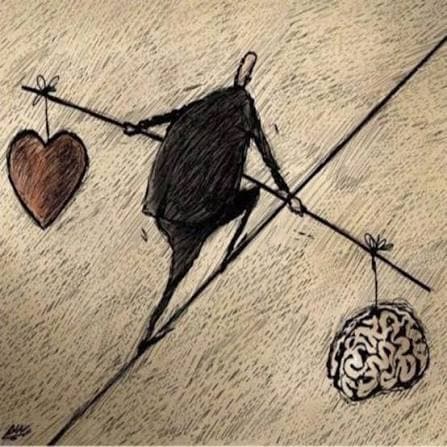
How many of you have heard the name Claire Wineland? If the answer is no, then buckle up, because I almost hadn't either, until a video of her dropped into my feed at exactly the wrong — or right — moment. She lives with cystic fibrosis from birth. She dies at twenty-one, a week after a double lung transplant that should have given her decades, when a stroke takes the rest of her time instead. Before any of that, she says something into a camera that I haven't been able to put down since: live in the moment. Everyone repeats that line like it's some mundane motivational speech. Rarely does anyone actually check the dictionary. It means to live briefly, for an indefinite period of time. Read that twice. Brief and indefinite, in the same breath. To me that fascinating contradiction is the whole trick of being alive, and almost nobody acknowledges that.
---
Picture a sea turtle hatchling — there are hundreds of them, breaking out of the sand at once, sprinting for the water in something that looks less like nature and more like a dare. Most don't make it. Now give one of them a vivid human mind. A bird's tosses it up with it’s beak to let it have some momentum before it eats it. In the half-second between the lift and whatever comes after, it sees the horizon — the whole curve of the beach, the light flat and gold across the water — for the first and only time. It's the last thing that hatchling will ever see unfortunately but It is still beautiful. The ending doesn't get a vote on its beauty.
---
Why does this matter even to healthy people?
Picture the version of "suicidal" everyone would recognize instantly — the version that makes a stranger's stomach drop, that has someone calling for help before they've even processed what they walked into. Can you see it?
Perhaps the moment you catch someone in the act of trying to use a knife to slash a vein. Or you see a rope dangling across a ceiling and someone standing on a chair right next to it. Either way that's the loud version.
Now picture the quiet one: you're standing at a crosswalk, the light's wrong, a car's coming faster than it should be, and instead of stepping back the way your body is built to, you just stand there. Curious. Almost relaxed. Your shoes don't move. Is that suicidal? What about the kid in seventh grade who got laughed at for saying he'd die to save someone else, and meant it? Nobody can draw a clean line around this word, and the people who try to make it sound poetic in essays have usually never stood anywhere near it.
---
From my conversations on a religious angle — every tradition seems to promise an extra reckoning for "wickedness," and suicide usually gets filed under that heading whether it belongs there or not. I started picking at it: if the only thing holding you back is fear of what happens after, is that conviction, or just fear wearing the costume of faith? I pondered on that question for a while and realized that it is highly likely then, that beyond death, there is no extra punishment.
It really is a compelling line of thought, I for one however must ignore it in this context, because it isn't actually the question that matters. Whatever you believe about what comes next doesn't change what's true right now — the unbearable part is happening in the present tense, and the present tense is the only place anything can actually be done about it. So I'm not going to use the threat of an afterlife to keep you here. I want to talk about why right now feels empty, because that part, unlike theology, we can actually work with.
---
Think about the kids you grew up around — maybe you were one of them. Some get raised like trophies, some like disappointments, and almost nobody escapes feeling like one or the other at some point, in some room, at some dinner table. If you're the disappointment, the thought arrives quiet and almost reasonable: maybe if I disappear, the house gets quieter. Maybe everyone exhales. It sounds logical, which is exactly what makes it dangerous — it makes sense to a mind that's already hurting. If you're the trophy, it shows up dressed differently: maybe if I disappear, my sibling finally gets room to breathe. Or just — I don't get to choose how I feel about my own life, because too much is riding on me being fine all the time. Different hallway. Same door.
---
Here's where I think people get it backwards. Disappearing sometimes gets described as the one piece of control left in a life where every other decision got made by somebody else. I get why that idea is seductive. I'm not a psychologist, I don't have a clean answer wrapped in a bow for you. But I don't think it's control. Control means watching how a decision plays out and adjusting. Disappearing however is the one move in the whole game with no replay, no adjustment, no version of you standing on the other side to see if it worked. That's not control at all, to me that's the permanent end of ever having any again.
---
Most people who've stood near this edge will tell you they never asked to be born. Fair point. But you were born — against odds so specific and so narrow that nobody can actually picture them. Your exact genetics, your exact timing, the precise version of you that exists and not some other version that doesn't — you already won the most probabilistic lottery you’ll ever see, before you were old enough to know there was a drawing. I think of it like a swimmer who crossed an ocean nobody can visualize and came out the other side on a beach they don't remember reaching. You don't feel like a victor most days. You are one anyway. That fact doesn't fix what's actually wrong. But it's worth keeping in your pocket on the nights the math feels impossible, as proof the insane odds have broken your way once already, against numbers worse than whatever's in front of you now.
---
The irony is people never really reach for the solution, they reach instead for the easier line; about who you'd leave behind: the real reason isn't really about them, even though that's where everyone's mind goes first. It's about you. It's that the last memory that belongs to you, the actual final one, doesn't get to be a happy one if you go now. That's reason enough on its own, before anyone else even enters the mental picture.
---
Claire mom calls it a "bigger than life" perspective, which really just means seeing past the one unbearable moment you're standing in toward the fact that more moments are coming that you can't predict yet — moments that might genuinely surprise you. Most disappearing happens because the future looks completely empty from exactly where you're standing. But almost everyone who's gotten close to that edge and stepped back says some version of the same thing afterward: I had no idea that conversation, that hike, that one stupid inside joke was still coming. I'm glad I stayed long enough to get to it.
---
Three things actually help. I think of them as the three C's, I learned them from a friend when dealing with a Burnout.
1. Control starts small, almost embarrassingly small. Not control over the big picture — nobody gets that, not even people who look like they have it together. Control over the next five minutes. Pick up the guitar you haven't touched in months and play badly. Write one paragraph you'll probably delete or tear up tomorrow. Walk to the end of the block and back. It doesn't have to be good, it doesn't have to mean anything to anyone else — it just has to be a real, small thing that's yours, done now, not in some "when things get better" future that keeps moving further away the longer you wait for it.
---
2. Communication is harder, because if you've probably already reached out once or multiple times and felt unheard, the idea of trying again probably sounds exhausting. A psychologist once said eight minutes of someone's genuine, undivided attention is enough to make a person who feels completely alone feel less alone — not totally fine, just less alone, which on the worst nights is its own kind of oxygen. The wall you've built doesn't have to come down. You just have to let one thing slip out from underneath it. The goal isn't to be perfectly understood. It's to stop carrying all of it by yourself for eight minutes.
---
3. Cognition means catching the story your mind is telling you mid-sentence and asking whether it's actually true or just loud. "What if everyone laughs at me behind my back for not meeting up my potential" is almost never the ninety-percent scenario (people have their own lives you know) — it's the two-percent scenario on a loop, because fear is a terrible statistician and a worse editor. Aim for realistic, not relentlessly sunny. A little optimism mixed in doesn't hurt. Too much of either — the despair or the forced positivity — distorts the picture past the point of being useful.
---
So that's it. Control the next five minutes. Say something true to someone, even quietly via prayer. Catch the lie your fear is telling you. None of it is a cure. None of it erases what's actually wrong in your life. But it's enough, some nights, to get you to the next morning — and some mornings turn out to be the ones that change everything after them.
---
I'm writing this with my own thoughts still loud some days and the pull toward the edge still coming up to mind in some shape or form. I mean You cannot stop every bird from flying overhead, but you can stop them from building a nest in your hair.
So I'll say this plainly, with nothing hedging it:
I will not disappear.
And I sincerely hope this article gave you — even just one more reason to live another day.
— Quinn